


.svg)
.svg)
.svg)

OEM Tire & Wheel Engineering
OEM tire and wheel engineering support for equipment manufacturers
Equipment manufacturers face a critical challenge. How do you match tire performance to machine specifications during the design phase? Load analysis, speed requirements and environmental parameters must align perfectly with each equipment model. This demands precise engineering of tire dimensions, compound formulations and rim configurations that integrate seamlessly with axle ratings, suspension geometry and intended duty cycles. the axle ratings, suspension geometry and intended duty cycles.
The right OEM tire and wheel engineering delivers factory-fitted assemblies that meet performance targets immediately. No post-delivery modifications required. Our OEM tire solutions eliminate procurement complexity when specifications are finalised during the design phase. Pre-mounted and balanced wheel assemblies arrive ready for installation, reducing assembly steps on production lines. Quality variance drops. Time-to-market accelerates for new equipment models.
Magna’s solution: application-matched engineering
Precise alignment between tire capabilities and machine performance envelope. Always engineered to exceed requirements.
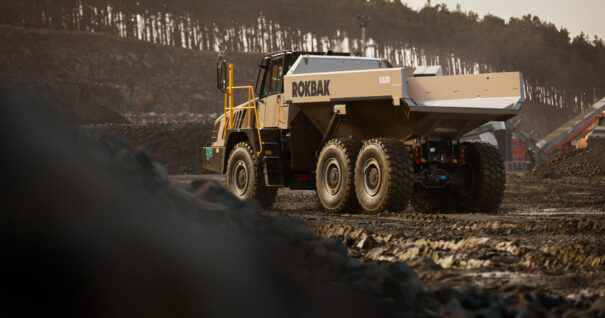
Load capacity specifications surpass maximum axle loads with 20-30% safety margins for mining applications. Speed ratings match operational limits exactly. Tread patterns reflect primary surface conditions—deep L3/L5 patterns with cut-resistant compounds for articulated dump trucks on haul roads, L2/L3 patterns optimised for traction and self-cleaning on wheel loaders in loading operations.
- Load index calculations account for uneven weight distribution and dynamic loading during operation
- Compound selection balances heat resistance for sustained high-speed haul cycles with cut protection for sharp rock environments
- Rim diameter and width specifications ensure compatibility with brake assemblies and wheel well clearances
- TKPH ratings validated through extensive laboratory and field testing programmes
Custom configurations for specialised applications
Standard catalogues don’t always meet specialised equipment requirements. That’s where custom engineering proves its value.
We address unique needs: non-standard rim diameters, bespoke bead seat geometries, application-specific rubber compounds. Underground mining equipment demands lower-profile tires to meet height restrictions in confined tunnels. Port equipment requires modified sidewall reinforcement to withstand constant turning loads. Complete wheel assemblies extend customisation to rim offsets, valve positioning and balancing procedures tailored to machine dynamics.
This integration reduces vibration-related wear on axle bearings and suspension components. For fleet operators managing multiple machine types, standardised wheel assemblies simplify inventory management despite varied equipment models. Always consistent, always reliable.
Value proof: measurable performance advantages
Data validates the engineering approach. Mining operations report extended tire life when assemblies are optimised for specific haul road surfaces and load profiles. The numbers speak clearly:
- Articulated dump truck tires engineered for specific payload capacities show 15-25% longer service life compared to generic fitments
- Wheel loader OTR tires with application-matched compounds reduce operating costs through predictable wear patterns
- Underground mining tire OEM configurations meet safety compliance for confined-space operations whilst maintaining productivity
- Properly matched tires reduce fuel consumption through minimised rolling resistance and improved traction efficiency
Heat dissipation improves when tire casing design accounts for machine duty cycles and ambient temperatures. Equipment reliability increases when wheel assemblies eliminate common failure modes. Pre-balanced assemblies reduce unplanned downtime from vibration-induced component failures. Precision-engineered bead seats prevent air leaks that cause pressure loss and irregular wear.
Rigorous testing and validation protocols
Laboratory testing verifies load capacity, burst pressure and heat resistance under controlled conditions. Field validation exposes prototypes to actual operational stresses—real haul road surfaces, ambient temperatures and authentic duty cycles. Data collection during testing informs compound adjustments, tread pattern modifications and rim specification refinements.
Validation extends beyond initial fitment. Engineers monitor wear patterns, casing integrity and performance degradation across full service life. This feedback loop enables continuous improvement in tire specifications and informs warranty structures. For excavator tire solutions OEM and backhoe loader wheel engineering, validation includes stability testing under maximum reach and digging loads.
Digital integration: TPMS and fleet management
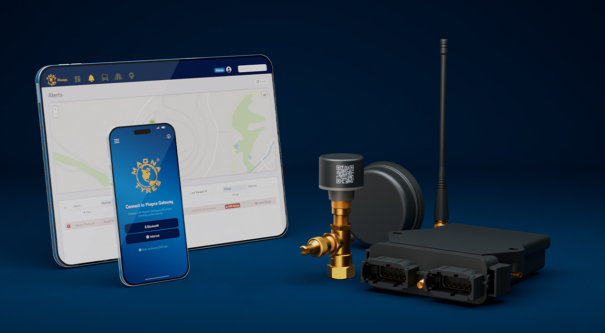
Modern OEM engineering incorporates digital monitoring capabilities. Tire pressure monitoring systems (TPMS) integrate during assembly, providing real-time pressure and temperature data to machine control systems. This enables predictive maintenance scheduling and alerts operators to developing issues before failures occur.
For construction wheel loader tires and forklift industrial tires OEM applications, pressure monitoring reduces fuel consumption and extends tire life through optimal inflation management. Standardised specifications across equipment types simplify fleet management. When all articulated dump trucks use identical wheel assemblies, technicians require fewer tools and less training. Bulk procurement yields significant cost advantages.
Magna Tyres OEM engineering capabilities
We supply original equipment tires and complete wheel assemblies for mining, construction and industrial equipment manufacturers worldwide. Our OEM programme includes engineering support from specification development through production integration. Always backed by technical data and performance validation.
- Articulated dump truck tires available in sizes from 23.5R25 to 29.5R29, with L3/L5 tread depths and heat-resistant compounds for sustained haul operations
- Wheel loader OTR tires engineered for loading applications, featuring reinforced sidewalls and self-cleaning tread patterns in radial and bias constructions
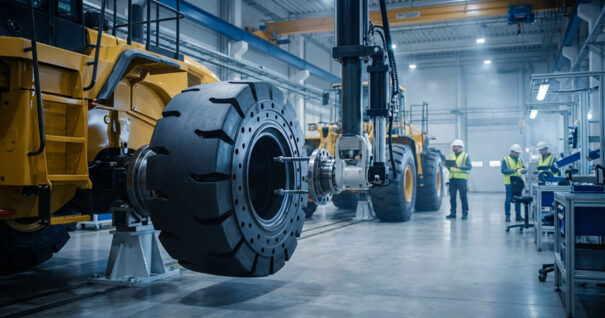
- Complete wheel assemblies delivered pre-mounted, balanced and tested to equipment manufacturer specifications
- Underground mining tire OEM configurations designed for confined-space operations with low-profile geometries and non-marking compounds where required
Our global manufacturing network enables consistent supply to equipment factories across multiple continents. Technical support includes on-site application analysis, custom compound development and integration assistance. Magna’s OEM solutions department provides dedicated engineering resources for new machine development projects.
Partner with proven OEM engineering expertise
OEM tire and wheel engineering aligns tire specifications with machine performance requirements during equipment design. Complete wheel assemblies reduce manufacturing complexity and ensure consistent quality across production runs. Application-specific engineering delivers measurable improvements in tire life, fuel efficiency and equipment uptime.
Custom configurations address unique operational requirements beyond standard catalogue specifications. Validation testing and long-term monitoring inform continuous improvement. Always innovative. Always reliable.
Contact our OEM solutions team to discuss your equipment specifications and discover how precision-engineered wheel assemblies reduce your procurement complexity whilst enhancing machine performance.