


.svg)
.svg)
.svg)
Understanding TRA Codes for Mining and Construction Tires
What Are TRA Codes for Construction Tires?
Selecting the right construction tire is not about size alone. In heavy-duty operations, the TRA code is one of the most critical technical indicators for performance, safety and total cost of ownership. TRA (Tire and Rim Association) codes form a globally recognised classification system that defines how a tire is built, how it performs under load, and in which operating conditions it delivers optimal service life. In practice, incorrect TRA selection is one of the most common causes of premature tire failure in construction and earthmoving environments.
What Do TRA Codes Actually Define?
A TRA code does more than indicate application. It specifies a tire’s design intent:
- Application category (earthmoving, loading, grading)
- Tread depth and pattern aggressiveness
- Load-carrying capability
- Heat resistance under sustained duty cycles
- Traction versus wear optimisation
In other words:
The TRA code determines whether a tire is suited for your actual operation, not just your machine type.
Key TRA Code Categories for Construction Tires
Earthmover Tires – TRA Code: E
Earthmover tires are engineered for high-load, high-impact operations on rough, abrasive terrain. These tires typically operate under extreme conditions where heat build-up, cut resistance and structural integrity are decisive factors.
Within this category, subcodes matter:
- E-2: shallower tread, faster cycles, lower rolling resistance
- E-3: balanced tread depth for mixed conditions
- E-4 / E-4+: deep tread for severe abrasion and extended service life
In quarry and mining operations, selecting an overly aggressive E-4 tire for short-cycle work often leads to excessive heat build-up and irregular wear, a common and costly mismatch.
Recommended for:
Quarries, open-pit mining, heavy earthmoving with sustained loads.
Grader Tires – TRA Code: G
Grader tires are designed for precision, stability and controlled traction, rather than maximum grip. The tread design supports continuous contact with the surface, ensuring accurate blade control and uniform wear.
Unlike earthmover tires, grader tires must balance:
- directional stability
- surface smoothness
- predictable wear patterns
Over-specifying tread depth in grader applications rarely increases tire life and often compromises grading accuracy.
Recommended for:
Road construction, site levelling, infrastructure projects.
Loader and Dozer Tires – TRA Code: L
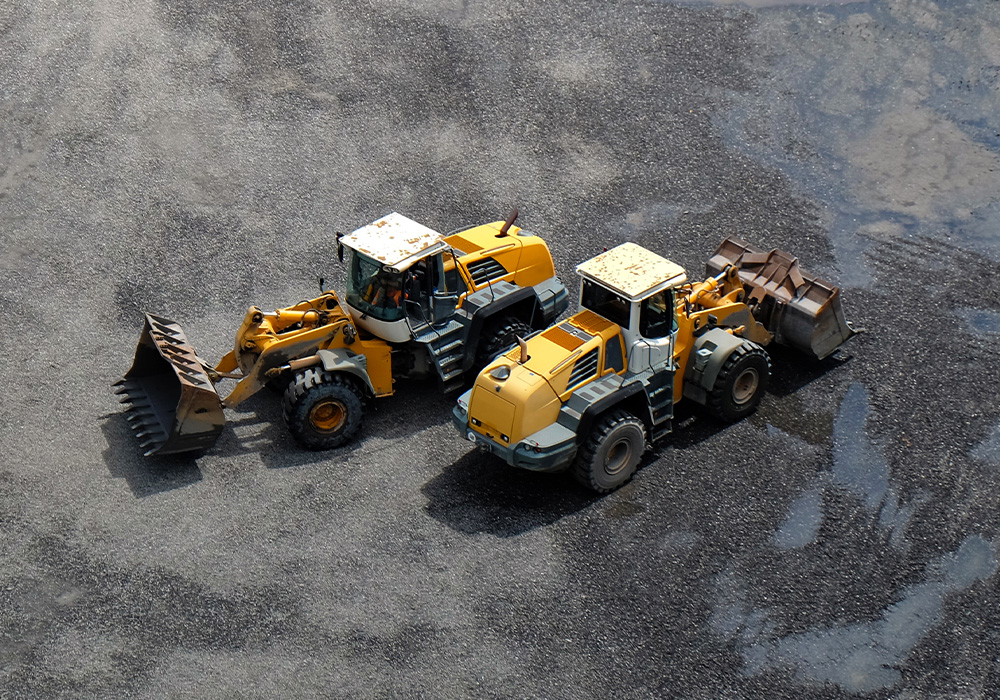
Loader tires operate in some of the most variable duty cycles in construction: frequent starts and stops, high torque, lateral forces and mixed surfaces.
Key distinctions within L-codes include:
- L-3: general-purpose, balanced traction and wear
- L-4: deeper tread for harsher ground conditions
- L-5: maximum cut resistance for demolition, waste and scrap environments
A frequent operational mistake is choosing an L-5 tire “for safety,” while the application does not justify it, leading to higher fuel consumption and unnecessary cost per hour.
Recommended for:
Loaders, dozers, recycling yards, bulk material handling.
Technical Factors That Influence Tire Performance Beyond the Code
Tread Depth and Heat Management
Deeper tread does not automatically mean longer life. In high-speed or short-cycle applications, excessive tread depth increases heat generation, which accelerates casing fatigue and reduces overall tire lifespan. Correct TRA selection aligns tread depth with duty cycle, not just terrain severity.
Star Rating and Load Alignment
Star ratings indicate load capacity at a given inflation pressure. However, higher star ratings are only beneficial when the load demand justifies them.
Overspecifying load capacity can:
- reduce footprint efficiency
- increase rigidity
- accelerate centre wear
Correct alignment between star rating, machine weight and operating load is essential for predictable wear and stable performance.
Why Correct TRA Selection Directly Impacts TCO
In real-world construction environments, tires rarely fail due to manufacturing quality. They fail because the design intent does not match the operational reality.
Correct TRA selection results in:
- lower downtime risk
- controlled wear patterns
- predictable replacement intervals
- reduced cost per operating hour
From a fleet management perspective, this is not a tire decision—it is a risk management decision.
Selecting the Right TRA Code: A Practical Approach
The correct TRA code cannot be determined by machine type alone. It requires understanding:
- duty cycle length
- average load versus peak load
- surface abrasiveness
- heat build-up potential
- operational priorities (traction vs wear vs efficiency)
This is where technical tire expertise makes the difference between theoretical suitability and real operational performance.
Expert Support for Construction Tire Selection
Magna Tires supports construction and earthmoving operations with tires engineered for reliability, durability and consistent performance under demanding conditions.
By aligning TRA codes with real operating conditions, fleets can avoid common mismatches and achieve measurable improvements in uptime and tire efficiency. Discuss your application and duty cycle with our specialists to determine the correct TRA specification for your operation.