


.svg)
.svg)
.svg)

Solid Tires vs Pneumatic Tires: Which Is Best for Your Operation?
How solid and pneumatic tires differ in industrial applications.
Solid tires are manufactured from solid rubber compounds without air chambers. Pneumatic tires use compressed air to support loads. In warehouse and port environments, this fundamental difference determines vulnerability to punctures. Solid tires eliminate downtime from deflation. Pneumatic tires offer cushioning but require pressure monitoring and repair infrastructure.
Forklift solid tires perform best on smooth concrete surfaces where debris risks are high. Pneumatic alternatives suit outdoor yards with uneven ground. The choice depends on surface conditions, shift patterns, and tolerance for maintenance interruptions. Operations running 24/7 in recycling or scrap handling favour puncture-proof tires over air-filled alternatives.
What is a Pneumatic Tire?
A pneumatic tire is an air-filled tire with a flexible rubber carcass, reinforced with steel or textile plies for strength. The air chamber lets the tire flex under load, absorbing shocks and maintaining consistent ground contact, something solid tires cannot match.
This flexibility reduces mechanical stress on the machine and limits heat build-up (TKPH) within the carcass during continuous operations. Matched correctly to load, speed and surface conditions, a pneumatic tire improves traction and stability while minimising downtime from cuts or premature wear, supporting longer tire life and a lower cost-per-hour.
Key advantages of using solid tires in demanding environments.
Puncture-proof operation is the primary advantage. Solid tires eliminate flat tire downtime in scrap yards and recycling facilities, and construction zones where sharp debris is unavoidable. This translates directly to reduced maintenance labour and uninterrupted shift productivity.
- Zero air pressure maintenance with no monitoring, inflation or leak repairs required
- Longer service life in debris heavy environments, typically 3 to 5 years under continuous use
- Predictable replacement scheduling because wear is gradual and visible, enabling planned downtime
- Improved stability under heavy loads because the solid construction prevents sidewall flexing
Cost per hour advantages accumulate in operations where pneumatic tires would require frequent repairs. A single shift delay from a punctured forklift tire can cost more than the price difference between tire types.
Performance characteristics: durability, stability and load capacity.
Solid tires deliver exceptional durability in controlled environments. Wear rates depend on surface quality, load weight, and turning frequency. On smooth concrete, solid tire life often exceeds 5,000 operating hours. Rough surfaces or excessive speed reduce this significantly.
Stability under load is superior to pneumatic alternatives. Solid construction prevents sidewall bulging during tight turns with elevated loads. This matters in narrow warehouse aisles where precision manoeuvring is constant. However, solid tires transmit more vibration to the chassis and operator, a trade-off for puncture immunity.
Load capacity specifications for solid tires are clearly defined by compound density and tire dimensions. Unlike pneumatic tires, capacity does not vary with inflation pressure. This consistency simplifies fleet management but requires precise size selection during initial specification.
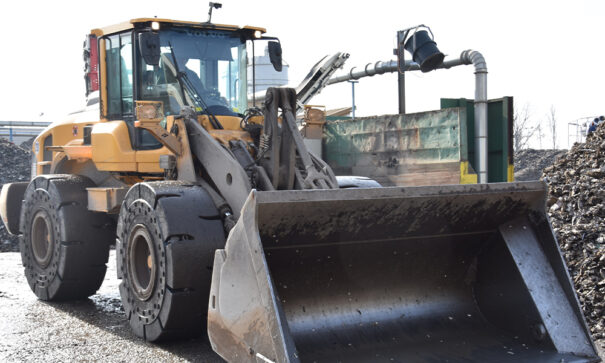
Magna Tyres solid tire solutions for material handling and ports
The Magna solid tire range meets the demands of industrial and material handling operations with press-on and resilient tire designs. These solutions serve forklift operations in warehouses, container terminals and manufacturing facilities, where debris and continuous use require puncture-proof reliability.
Press-on solid tires for electric and diesel forklifts, engineered for smooth-surface operation with low rolling resistance to reduce energy consumption
Non-marking compounds for food-grade and pharmaceutical warehouses, protecting floor surfaces from contamination while delivering durable performance
Heavy-duty compounds for port equipment, built for high-load container handling and extended service intervals to maximise uptime
Below, you find our best-performing tires for this application.


When to choose solid over pneumatic or foam-filled alternatives.
Solid tires suit indoor material handling on prepared surfaces where puncture risks are high. Warehouses, manufacturing plants, recycling facilities, and port terminals benefit most. Choose solid tires when operations run multiple shifts with minimal downtime tolerance. The upfront cost premium pays back through eliminated repair calls and consistent availability.
Pneumatic tires remain preferable for outdoor applications on unpaved ground. Cushioning from air pressure reduces vibration and improves traction on uneven terrain. Foam-filled tires bridge the gap, offering puncture resistance with better shock absorption than solid alternatives, though at higher cost and weight.
Avoid solid tires on rough outdoor surfaces or applications requiring frequent high-speed travel. Heat buildup from continuous flexing can cause premature wear or compound degradation. Operations mixing indoor and outdoor work may need dual tore types across their fleet.