

Solid Tyres vs Pneumatic Tyres
How solid and pneumatic tyres differ in industrial applications.
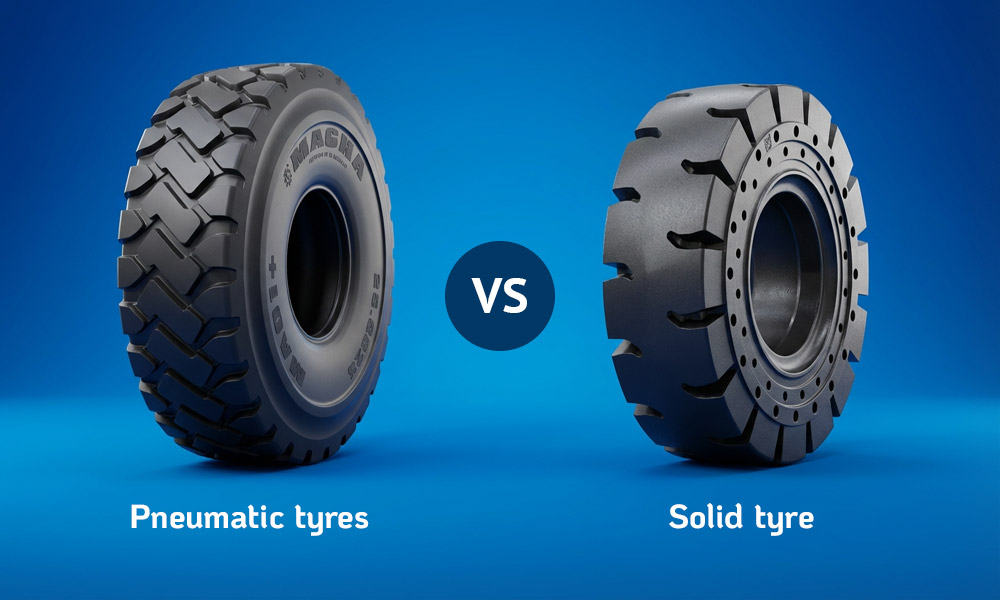
Solid tyres are manufactured from solid rubber compounds throughout their cross-section. No air chamber exists. Pneumatic tyres contain an air-filled inner tube or sealed cavity between the tread and rim, similar to automotive tyres. This fundamental structural difference determines every aspect of performance.
In warehouses, pneumatic tyres compress and flex with the load. Air pressure provides cushioning. Solid tyres transmit load directly through the rubber compound with no air cushion. The result: pneumatic tyres offer smoother ride quality, while solid tyres eliminate uptime from punctures and pressure loss.
Forklift operators working on smooth concrete often prefer the zero-maintenance reliability of solid tyres. Outdoor operations on rough ground may benefit from the shock absorption pneumatic tyres provide. The choice depends on surface conditions, load patterns and uptime requirements.
What solid tyres are made from and why material matters.
Industrial solid tyres use natural rubber blended with synthetic polymers and carbon black reinforcement. The compound formulation determines wear resistance, heat dissipation and load capacity. Premium solid tyres incorporate cushion layers between the tread and base for improved operator comfort.
Pneumatic tyres combine rubber tread compounds with fabric or steel cord reinforcement in the carcass. Air pressure maintains the tyre shape. The internal structure must resist pressure while remaining flexible. Solid tyres require no internal reinforcement beyond the rubber compound itself.
Non-marking solid tyres replace carbon black with alternative fillers, producing white or coloured rubber. These materials maintain structural integrity while preventing floor marks in food processing, pharmaceutical and cleanroom environments. The material properties of solid tyres directly affect service life and total cost of ownership.
Key advantages of using solid tyres in demanding environments.
Puncture immunity delivers the primary advantage. Solid tyres cannot deflate. Warehouses with sharp debris, construction sites with nails and scrap metal, and recycling facilities eliminate tyre failures entirely with solid rubber. Equipment operates continuously without pressure checks or emergency repairs.
Maintenance requirements drop dramatically. No air pressure monitoring, no valve replacements, no puncture repairs. Fleet managers reduce labour costs and simplify servicing. The solid construction tolerates operational abuse that would destroy pneumatic tyres within hours.
Load stability improves under heavy, sustained loads. Solid tyres do not deform permanently from continuous weight. Container handlers and material handlers maintain consistent geometry throughout multi-shift operations. The tyre footprint remains stable, improving precision in load placement.
Service life in harsh environments often exceeds pneumatic alternatives by 200-300%. Solid tyres handle oil exposure, chemical spills and temperature extremes without internal damage. Initial cost per tyre runs higher, but cost per operating hour typically falls 30-40% below pneumatic alternatives in demanding applications.
Performance characteristics: durability, stability and load capacity.
Solid tyres deliver exceptional durability through consistent rubber density. No internal weak points exist. Tread wear progresses predictably across the contact surface. Operators can monitor remaining depth and plan replacements during scheduled maintenance windows rather than emergency failures.
Lateral stability under side loads surpasses pneumatic designs. The solid construction resists sidewall deformation when forklifts turn sharply or handle off-centre loads. This stability reduces tipping risk and improves operator confidence in tight warehouse aisles.
Load capacity depends on tyre size and compound density. Solid tyres handle rated loads without pressure adjustments or inflation concerns. The load-bearing capacity remains constant throughout the tyre’s service life. Pneumatic tyres lose capacity as air pressure drops, creating safety risks if not monitored continuously.
Heat buildup presents the primary limitation. Solid rubber dissipates heat less efficiently than air-filled pneumatic tyres. High-speed or long-distance operations may generate excessive heat in solid tyres, potentially causing compound degradation. Short-cycle warehouse applications avoid this limitation entirely.
When to choose solid over pneumatic or foam-filled alternatives.
Indoor material handling operations benefit most from solid tyres. Smooth concrete surfaces minimise the ride quality disadvantage. Continuous operation demands eliminate the uptime risk pneumatic tyres introduce. Warehouses, distribution centres and manufacturing floors represent ideal applications.
Construction sites with debris hazards require puncture-proof solutions. Foam-filled pneumatic tyres offer a middle ground, providing some air cushion while reducing puncture risk. However, foam filling adds weight and cost without matching the durability of true solid construction.
Port and terminal operations handling containers choose solid tyres for uptime reliability. Reach stackers, terminal tractors and container handlers operate in environments with steel debris, wood splinters and fasteners. Any pneumatic failure halts container movement, costing thousands per hour in delayed operations.
Choose pneumatic tyres when outdoor terrain is rough and shock absorption becomes critical. Agricultural transport, mining haul roads and earthmoving applications often require the cushioning only compressed air provides. Speed-sensitive applications above 25 km/h may also favour pneumatic designs for heat management.
Relation to other factors.
Material composition interacts directly with load requirements and operating environment. Compound hardness affects both wear rate and operator comfort. The broader category of solid tyres includes variations in tread pattern, cushion layers and rubber formulations tailored to specific industrial demands.
Tyre construction determines maintenance schedules and replacement intervals. Solid designs eliminate routine pressure checks but require periodic cleaning to remove debris trapped in tread grooves. Pneumatic tyres demand daily pressure verification but allow easier visual inspection of tread wear.
Surface conditions influence the performance gap between solid and pneumatic options. Polished warehouse floors minimise the comfort disadvantage of solid tyres. Outdoor operations on gravel or broken pavement magnify the advantage pneumatic shock absorption provides.
Magna Tyres solid tyre solutions for material handling and ports.
Magna manufactures forklift solid tyres across the complete size range for industrial and port equipment. The solid tyre portfolio includes press-on band designs for electric forklifts and resilient solid tyres for larger material handlers. All models use compound formulations optimised for European warehouse and terminal conditions.
The MA600 solid tyre, developed specifically for port reach stackers and container handlers, delivers proven durability in container terminal environments. Field testing at European ports confirms service life exceeding 12,000 operating hours under full-capacity container loads. The compound resists cuts from steel debris while maintaining dimensional stability.
Non-marking variants suit food processing, pharmaceutical manufacturing and cleanroom operations. These solid tyres meet industry standards for floor protection while maintaining load capacity and wear resistance. The compound formulation eliminates carbon black without sacrificing structural performance.
Choosing the right tyre type for your operation.
- Solid tyres eliminate puncture uptime and maintenance in debris-heavy environments, making them ideal for warehouses, ports and construction sites where uptime is critical
- Pneumatic tyres provide superior ride quality and shock absorption for outdoor operations on rough terrain, but require daily pressure monitoring and puncture risk management
- Material composition determines wear life, heat resistance and load stability — premium solid compounds with cushion layers balance durability with operator comfort
- Total cost of ownership typically favours solid tyres in continuous indoor operations despite higher initial purchase cost
- Equipment speed, surface conditions and load patterns determine which design delivers optimal performance for specific applications