


.svg)
.svg)
.svg)

Mining & Earthmoving Tyres
Developed for the most demanding mining and earthmoving applications.
Read More
Developed for the most demanding mining and earthmoving applications.
Read More
Magna Tyres supplies radial and bias mining, earthmover and OTR tyres for surface mines, quarries, construction projects and underground operations. Select your application or machine, then match the tyre to the actual load, speed, cycle distance and surface conditions. The correct specification supports reliable performance, longer tyre life and controlled operating costs.


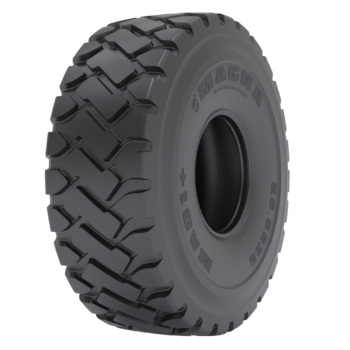

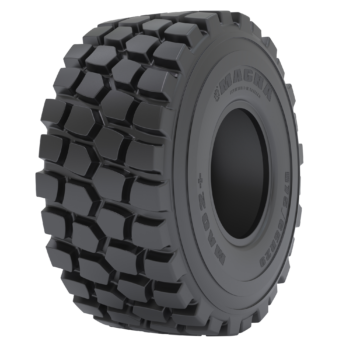


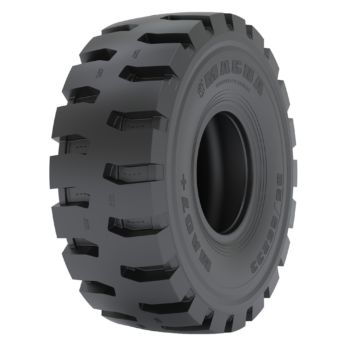


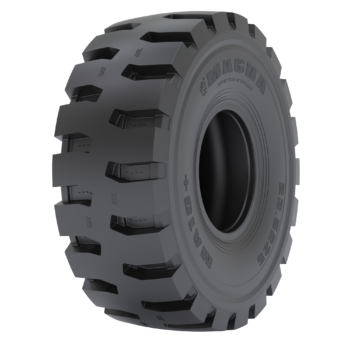


Mining and earthmoving operations place different demands on a tyre during every cycle. A dump truck may travel repeatedly under heavy load. A wheel loader generates high torque while loading, turning and reversing. A grader needs predictable steering response, while an underground machine may work around sharp rock in confined spaces. These machines belong to the same broad OTR category, but they do not need the same tyre specification.
Earthmoving tyres must provide the right balance between traction, stability, wear resistance, casing protection and heat management. The required balance changes with the application. Soft or muddy ground can favour an open, self-cleaning tread. Hard and abrasive surfaces place more emphasis on controlled wear. Sharp rock and debris increase the need for cut and impact resistance. Longer loaded cycles make heat generation a more important consideration.
This is why Magna Tyres offers tyres for both general earthmoving and severe mining applications. The objective is not simply to fit the deepest or heaviest tyre available. The objective is to select a tyre that supports the machine, the complete duty cycle and the operational priorities of the site.
Machine type and tyre size provide a starting point. They confirm which dimensions and constructions may be suitable. They do not describe how the machine works on a particular site. Two identical machines can need different tyres when their loads, speeds, surfaces or cycle distances differ.
Start with the actual load carried by each tyre in loaded and unloaded conditions. The tyre size, load capacity, construction and inflation pressure must work together. Repeated overloading increases casing stress and deflection. This generates additional heat and may shorten tyre life.
Next, record the average and peak speeds, the loaded speed and the distance of a complete cycle. Short loading cycles with frequent turns create different stresses from sustained haulage. For repeated haul cycles, TKPH helps determine whether the work capacity of the tyre and compound matches the operation.
Surface conditions complete the picture. Mud, sand, compacted soil, sharp rock and abrasive haul roads each require a different performance balance. Existing tyre records can show whether cuts, impacts, heat, wheel spin or irregular wear create the main operational risk. Read our guide to earthmoving machines and their tyre requirements for a more detailed selection process.
Articulated dump truck tyres work across uneven, loose and often less developed ground. These machines combine loaded and unloaded travel with articulation, steering forces and changing surface conditions. Their tyres commonly need dependable traction, lateral stability, self-cleaning performance and protection against cuts and impacts. Cycle distance and speed still matter. An ADT travelling over longer distances may require a different tread depth or compound from a machine working on short, slow cycles.
Rigid dump truck tyres carry high payloads on repeated haul cycles. Load capacity, heat management, TKPH, impact resistance and predictable wear are central selection factors. Road design also influences the result. Potholes create impact forces, steep gradients increase traction and braking demands, and narrow roads expose sidewalls to edges and loose material.
No tyre can compensate for an unsafe or poorly maintained road. Tyre selection and road management must support each other. Learn how potholes, gradients, road width, drainage and loose material can affect performance in our article on mining haul road conditions and tyre life.
Wheel loader tyres experience repeated loading, lifting, turning and reversing. Bucket load and material density change the weight carried by the front and rear axles throughout the cycle. High torque can also increase wheel spin and tread wear. General earthmoving, quarry loading and open-pit mining therefore require different balances of traction, tread depth, casing protection and heat resistance.
TRA codes such as L3, L4 and L5 indicate the intended loader application and relative tread depth. A deeper tread provides more wearable rubber and additional protection, but it can also retain more heat. The most robust-looking option is not automatically the most productive choice. Our guide to wheel loader tyres by application explains how to compare tyres for construction, quarrying and mining work.
Dozer tyres need traction and stability when pushing or levelling material on loose, muddy or uneven ground. Surface type, machine weight, torque and the risk of wheel spin guide the selection. The tread must generate usable grip without creating an unnecessary penalty in wear or rolling resistance.
Grader tyres support steering accuracy, blade control and stable movement while building or maintaining roads. Directional stability and predictable traction can be more important than maximum tread depth. Even wear helps preserve consistent machine behaviour over time.
Scraper tyres must combine traction during loading with the ability to carry changing loads at travel speed. Longer cycle distances can increase heat build-up, while abrasive ground increases tread wear. The complete loaded and unloaded cycle should determine the tyre specification.
Large rigid dump trucks require tyres engineered for substantial loads and repeated haulage. As equipment size increases, tyre performance becomes closely connected to production continuity. Load distribution, operating speed, haul distance, TKPH, ambient temperature and road condition all influence the correct specification.
Our giant tyre range is intended for large mining equipment working in demanding surface operations. Selecting a giant mining tyre requires verified site data. Even a technically suitable tyre can underperform when pressure, payload or road conditions move outside the intended operating range. Consistent inspections and performance records help protect the casing, reduce unplanned downtime and improve control over tyre cost.
Underground mines expose tyres to sharp rock, restricted working areas, debris, moisture and repeated directional changes. Machines frequently operate close to walls and broken material. This increases the risk of tread, shoulder and sidewall damage. Low-speed, high-torque cycles can also generate intensive wear.
The Magna Tyres range of underground mining tyres includes solutions for loading and haulage equipment. Tread design, casing strength, cut resistance, traction and load capacity must reflect the machine and the conditions at the working face.
Underground dump truck tyres carry material through confined routes with gradients, tight turns and variable surfaces. They require a controlled balance of traction, stability, damage protection and heat management. Underground loader tyres face high torque and repeated loading cycles near broken rock. These applications can place greater emphasis on cut resistance, casing protection and grip at low speed.
Radial and bias tyres can both suit mining and earthmoving work. Their suitability depends on the application rather than a universal preference. Radial construction can support heat management, ride comfort and longer travel cycles. Bias construction can provide a robust structure for selected low-speed applications with high impact or cut risks. Confirm the machine requirements, rim specification and intended duty before choosing a construction.
Tread depth must also match the operating cycle. E3 and L3 patterns can suit applications that need a balance of traction, wear and controlled heat generation. E4 and L4 patterns provide deeper tread for more demanding haulage or loader conditions. L5 patterns add further tread volume and protection for severe loader work, but the additional rubber can retain more heat. Smooth L5S patterns suit selected high-damage environments where protection takes priority over aggressive tread traction.
The compound adds another layer to the decision. Heat resistance becomes more important as load, speed and cycle distance increase. Cut and wear resistance become more important on abrasive or sharp surfaces. These requirements can conflict, so accurate operating data is essential when selecting the most suitable balance.
The lowest purchase price does not necessarily produce the lowest operating cost. Service life, repair frequency, tyre-related downtime, maintenance and remaining casing condition all affect the financial result. A tyre that costs more initially may achieve a lower cost per hour when it remains productive for longer and reduces secondary costs.
Assign each tyre an individual identification number. Record its installation date, machine, position, pressure, tread depth, repairs, operating hours and reason for removal. Combine these records with route, payload and cycle information. This makes it easier to separate an isolated incident from a repeated operating pattern.
Compare tyres only when they work in similar applications. Machine type, axle position, load, route and season can all affect the outcome. Use productive operating hours as a consistent measure, and include directly attributable downtime where the data is reliable. Our practical guide explains how to calculate mining and earthmoving tyre cost per hour.
Still have questions? Check the FAQs below or connect with one of our specialists.
Which tyre construction is better for mining operations: radial or bias?
Both constructions suit mining applications depending on specific requirements. Radial tyres like the MA01+ offer superior heat resistance and productivity, whilst bias tyres like the MB10 excel in severe conditions requiring maximum cut resistance and impact protection.
What tread depth should I select for articulated dump trucks operating in rocky terrain?
For articulated dump trucks in demanding conditions, opt for deep-tread E4/L4 patterns. The M-TERRAIN+ features 71-72mm tread depth and super-wide tread width, delivering outstanding wear resistance and stability on challenging surfaces.
How do L3, L4 and L5 tread patterns differ for earthmoving equipment?
L3 (E3) patterns suit general earthmoving with moderate debris; L4 (E4) offers deeper treads for dump trucks on mixed terrain; L5 provides maximum depth for severe applications requiring exceptional cut resistance, like the MB10 with 91mm tread.
What size range covers most wheel loaders and earthmovers in mining operations?
Common sizes span 17.5R25 through 35/65R33 depending on machine capacity. The MA01+ range (17.5R25 to 29.5R25) accommodates standard loaders, whilst larger equipment requires sizes like 26.5-25 or 35/65R33 for heavy-duty applications.