


.svg)
.svg)
.svg)

How Haul Road Conditions Affect Mining Tyre Life
Mining tyre life does not depend on tyre specification alone. The road beneath the machine influences every loaded and unloaded cycle. Potholes create impact forces. Steep gradients increase traction, braking and heat demands. Roads that are too narrow expose tyres to soft edges, loose rock and frequent steering corrections. These conditions can increase wear, damage casings and cause premature tyre removal. They can also reduce cycle efficiency and create unplanned downtime. Selecting suitable mining and earthmoving tyres remains important, but tyre selection and haul road management must support each other.
Why mining Haul Roads Influence Tyre Life
A rigid dump truck transfers a substantial load through a relatively small contact area. When the road is level and well maintained, the tyre can carry the load more consistently. When the truck enters a pothole or crosses loose material, the forces change quickly. The tyre deflects, the load shifts and the casing absorbs an additional impact.
The complete operation cycle matters. Vehicle speed, payload, gradient, cycle distance, inflation pressure and ambient temperature all influence heat generation and damage risk. You should therefore assess the road together with the machine and its duty cycle. Our guide to earthmoving machines and their tyre requirements explains how these requirements differ by machine type.
1. Potholes Create Impact and Casing Stress
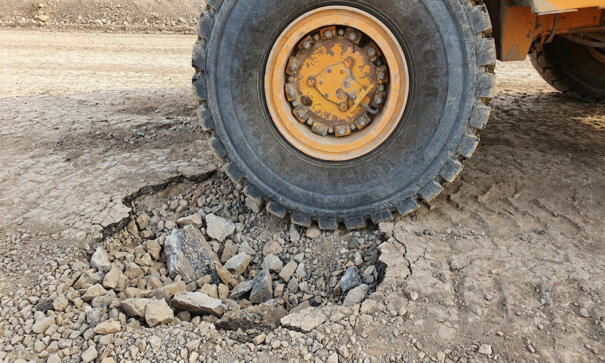
Potholes are more than a comfort issue. When a loaded truck enters a deep pothole, the tyre can experience a rapid change in load and deflection. A sharp edge can damage the tread, shoulder or sidewall. Repeated impacts may weaken the casing even when the damage is not immediately visible.
Speed increases the severity of the impact. Inflation pressure also affects how the tyre responds. Underinflation creates excessive deflection and heat, while an unsuitable pressure for the actual load may reduce the tyre’s ability to manage the operating conditions. Pressure should therefore follow verified load data and the applicable technical recommendation.
Look for recurring cuts, bulges, separations, irregular wear or damage in the same wheel position. These patterns may point to a road defect, an operating issue or an incorrect tyre specification. Repairing the road without inspecting the affected tyres can leave hidden damage in service. Replacing tyres without repairing the pothole allows the problem to continue.
2. Steep Gradients Increase Heat and Traction Demands.
Steep gradients change how a haul truck distributes load and uses torque. A loaded truck travelling uphill requires sustained traction. This can increase tread stress and heat build-up, particularly during longer cycles or in high ambient temperatures. Travelling downhill places greater emphasis on braking control and speed management.
One mine-site study supplied for this article monitored dump trucks using GPS-based cycle data. It connected road gradient, speed, load, inflation pressure and TKPH with tyre operating conditions. The findings support a practical point: gradient cannot be assessed separately from payload, direction of travel and speed. The study identified gradients of up to 8% as the best compromise in its specific operation. This figure should not be treated as a universal design limit because mine design, equipment and local requirements differ.
Record loaded and empty speeds, cycle distance, travel direction and time spent on each gradient. Compare this information with tyre temperature, pressure and damage records. For repeated haul cycles, TKPH helps determine whether the combination of average tyre load and work-shift speed fits the tyre and compound.
3. Narrow Haul Roads Increase Edge and Steering Risks.
A haul road must provide sufficient operating width for the selected trucks, traffic direction and required safety clearances. When the usable road is too narrow, drivers have less room to avoid potholes, loose rock and unstable edges. Tyres may run close to berms or onto softer shoulders, increasing the risk of sidewall contact and uneven loading.
Frequent steering corrections can also create additional lateral forces and irregular wear. Congestion or restricted passing space may lead to repeated braking and acceleration, which changes the heat and traction demands during the cycle.
Do not judge road width by the visible running surface alone. Drainage channels, loose edges, berm placement and accumulated material can reduce the usable width. Inspect the complete route from the driver’s perspective and record locations where vehicles regularly deviate from the preferred line.
Combine Tyre Inspections with TPMS Data
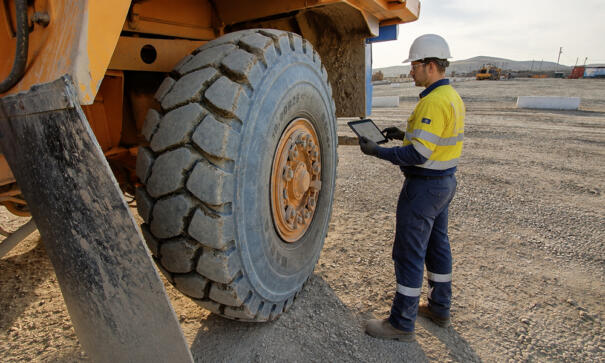
Tyre inspections can reveal where a mining haul road needs attention. Record the damage type, tyre position, machine, operating hours and route. A single cut may be incidental. Repeated shoulder or sidewall damage on trucks using the same road section indicates a pattern worth investigating.
Physical inspections remain necessary for identifying potholes, loose rock, material spillage and visible tyre damage. Magna TPMS adds continuous operating data to this process. The system monitors tyre pressure and temperature in real time and generates alerts for moderate and extreme readings, including when the machine is unpowered.
GPS location, speed, distance travelled and operating hours provide additional context. This allows maintenance and tyre teams to compare alerts with specific machines, routes and operating periods.
Combine Magna TPMS data with records of:
- Pothole location, depth and recurrence.
- Gradient and direction of loaded travel.
- Usable road width and road-edge condition.
- Loose rock and material spillage.
- Visible tread, shoulder, sidewall or casing damage.
- Recurring wear by tyre and wheel position.
For example, repeated temperature alerts on trucks using the same route can help teams identify where further investigation should begin. The alert alone does not prove that the haul road caused the temperature increase. Payload, speed, inflation pressure, cycle distance and ambient temperature must also be considered.
Magna TPMS makes this information available through its web portal and mobile application. Responsible teams can receive alerts and assign follow-up actions without waiting for the next manual pressure check. Combining continuous tyre data with physical inspections supports faster road repairs, earlier tyre intervention and more predictable uptime.
Connect Haul Road Maintenance to Cost per Hour
Premature tyre removal affects more than replacement cost. It can interrupt production, require service equipment and reduce the value retained in the casing. Poor road conditions may also reduce average speed or increase fuel use through repeated braking, acceleration and rolling resistance.
Measure tyre performance in productive operating hours and cost per hour, not purchase price alone. This creates a clearer comparison between tyre cost, service life, maintenance and downtime. Read more about the cost per hour of mining and earthmoving tyres.
Tyre Options for Demanding Haul Roads
No tyre can compensate for an unsafe or poorly maintained haul road. Once the road, load and cycle risks are understood, the tyre specification can provide the required balance of traction, heat management, wear resistance and damage protection.


A Magna MA04+ reference from a copper mine in Vietnam reported that the 24.00R35 tyres remained intact after more than 4,000 operating hours in challenging conditions. This is a site-specific result, not a general service-life guarantee. It shows why product selection should be evaluated against real operating data.
Wheel loaders working near the loading face experience different speeds, loads and turning forces from haul trucks. See wheel loader tyres by application when assessing that part of the operation.
Improve the Road and the Tyre Decision Together
Start with the defects that create the greatest operational risk. Repair recurring potholes, assess steep gradients with real cycle data and restore sufficient usable road width. Then verify payload, speed, pressure, temperature and damage trends. These actions help protect tyre life while supporting uptime and more predictable operating costs.
If you are reviewing a mining operation, share the machine, tyre size, payload, cycle distance, speed and haul road conditions with one of our specialists. This information helps identify a suitable specification. You can also explore our complete Mining & Earthmoving tyre range.